As part of our recognition of Indigenous veterans, student-connected family stories about military service and applications for Portage College student funding opportunities like the Flight Sergeant Erlyn E. Kirby Memorial Bursary, we are sharing a collection of stories honouring our service women and men.
Students applying for Kirby Memorial Bursary
Caleb Theroux – Environmental Technologist Diploma 2026
Veteran connection: Great-grandfather Alphonse Joseph St. Germain
At 19, I stand at the edge of adulthood. The opportunities I have now are things my great-grandfather Alphonse Joseph St. Germain could never have dreamed of. He was born in 1920 in Loon Lake, Saskatchewan. He was a Cree man. In August 1940 when he was 20 years old, he joined the Canadian 1st Infantry as a rifleman. He served for 61 months. More than half of that time was spent overseas, including 11 months as a prisoner of war.
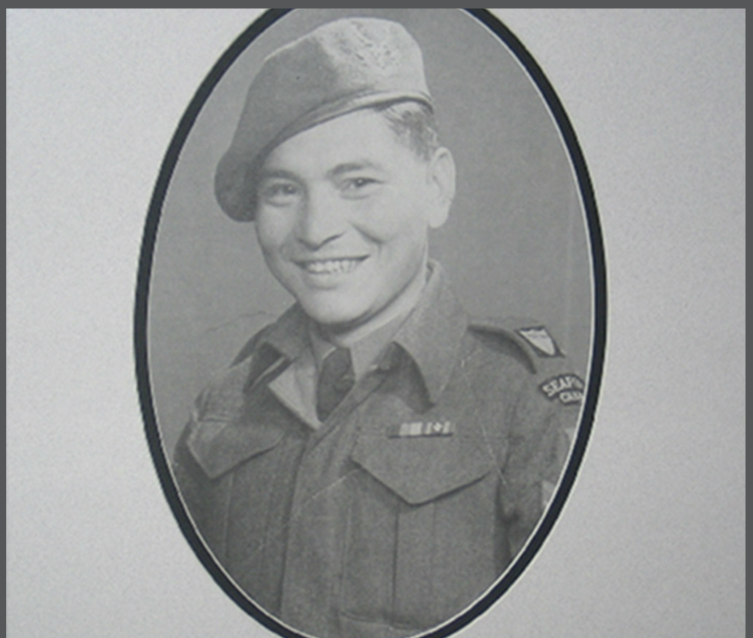
He was wounded and captured on May 23, 1944, after fighting the Axis powers on the front lines of the Italian Campaign in the Battles of Ortona and Cassino in Italy. His prison camp was liberated in May of 1945. For him, the war was over, and he made his way to Red Deer.
He carried home medals — the 1939–1945 Star, the War Medal, the Italy Star, and the Defence Medal. He also carried scars. He carried memories. He carried a life where education had been delayed or denied altogether. He carried it all with him as he once again began to create a life for himself.
The stories of Canada’s fallen soldiers and of those who returned forever changed are not facts from the past, they are living reminders. They show what ordinary people were willing to risk when the world demanded more than comfort. My great-grandfather was an Indigenous man from the Prairies. He answered the call at a time when Canada was still figuring out how to treat its First Nations citizens in the country they were asked to defend. When Indigenous soldiers volunteered in numbers that surprised people, they did so despite those obstacles they faced at home.
His decision to enlist, his strength through combat and captivity, and his quiet return speak to his character and the thousands like him. His story teaches us that freedom is never free, and the cost is often paid by those who started with the least.
These stories matter today because the values they carry, duty, resilience, and the willingness to put others before yourself are not automatic. In a time of relative security, that kind of sacrifice can feel distant – but the same questions that Alphonse Joseph St. Germain faced still sit with us today: What are we prepared to defend? What cost are we willing to accept for the freedoms we enjoy?
My great-grandfather survived – but the war took away whatever chance he might have had to keep going with school. Like so many others — those who fell and those who returned — he never got those lost years back.
That fact stays with me every time I open a textbook or walk onto campus. It reminds me that my ability to study, to choose a path to plan a future — come at a price. A price measured in months of captivity in wounds, in lives ended far from home. It makes me see education not as something to be taken lightly, but as a responsibility. A responsibility I’ve been given the chance to fulfill on behalf of those who couldn’t.
When I think of Alphonse Joseph St. Germain — 20 years old in 1940. A young Cree from Loon Lake, a rifleman, prisoner, survivor — I don’t see a figure in a uniform from long ago. I see a man who was almost exactly my age when he stepped into a war that would shape the rest of his life. His story and the stories of all who served and died remain important because they force the question: What will I do with the time and freedom they helped secure?
My answer starts with gratitude. It means studying with purpose. It means carrying forward the pride of a family that includes a man who lived through Ortona, Cassino and a prison camp. A man who came home to Red Deer, built a life that helped to create my life. It means making sure the next generation hears these stories — not as dusty history, but as proof that ordinary courage still shapes the world we inherit.
Ashley Twigge – Practical Nurse 2026
Veteran connection: Great-grandfather Kenneth Thomas Ferguson
Every November, we pause to honour the fallen soldiers who made the ultimate sacrifice so that we could have freedom in all aspects of our lives. Hearing their stories reminds us of the courage, sacrifice, and dedication that help shape Canada. Every soldier has a unique story, a family, and a life that goes beyond the battlefield, which makes their sacrifices deeply personal and meaningful.
Their stories remain relevant today because they encourage all Canadians to reflect on the importance of peace, freedom and remembering those that served our country.
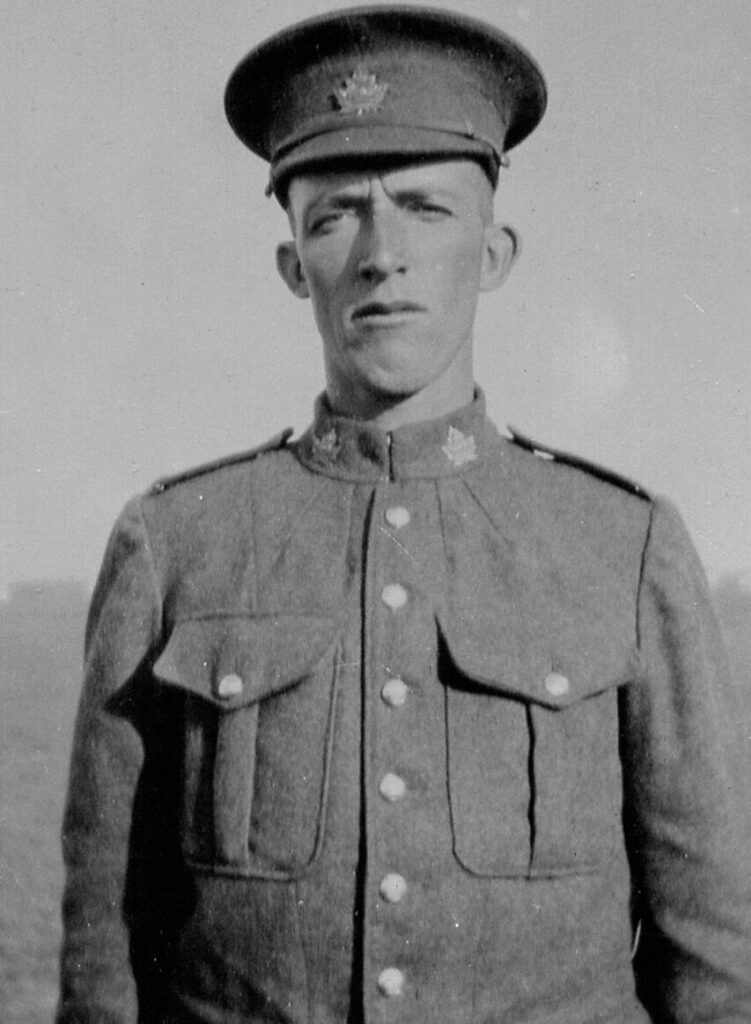
On March 28, 1916, at 27, my great-grandfather, Kenneth Thomas Ferguson, enlisted in World War I. He served in France as Sapper K. T. Ferguson—904844, 194th Battalion, 4th Platoon, Railway Troops. We were fortunate; he returned home physically unharmed. Years later, he was granted farmland through the Veterans Land Act. His dedication to farming and providing for our family taught us the importance of perseverance and pursuing our dreams.
As I enter a career in the health care industry, I strive to help those in need. I have experienced the feeling of loss, not through war, but through the battle of cancer. In 2024, I lost my beloved husband in our battle with cancer. Now this battle may not have been over war or freedom, but a personal fight to embrace tomorrow. Experiencing this has made me stronger and more resilient.
Both in war and illness, the fight is marked by courage, endurance, and inevitable wounds, whether external or internal. The knowing there is no need to rush home, as no one is there waiting patiently for you. The loss of my husband to cancer mirrors the aftermath of a battlefield: quiet, haunting, and forever changed.
His passing left not only an emotional void but also a financial one. We had built our lives together around shared responsibilities and dreams. Navigating grief while struggling to stay financially afloat has been one of the hardest challenges. Yet, like the families of the fallen soldiers, I have learned to find my strength in the darkest moments and to keep moving forward. They sacrifice themselves so we can embrace every day and every moment.
Kimberly Lavigne – Hairstyling Certificate 2026
Veteran connection: Grandfather and Great-grandfather Alfred Richard Lavigne and Alphee Richard Lavigne
When I was 17, I left home in Ontario to move to Nunavut to start my working life at the Siniktarvik Hotel & Conference Centre in Rankin Inlet. While I was saying goodbye to my family, my grandpa Alfred Richard Lavigne, took me aside and explained when he was in the Canadian Air Force, he was part of the group who were tasked with creating the maps for the NWT and Nunavut Regions (before Nunavut was its own territory).
His eyes lit up when he talked about it, I can only imagine the stories he could have told about his time there. It gave me a bit of comfort stepping into such a new place at the age I was, he was very proud of his work.
My grandfather joined the Royal Canadian Air Force because he has always had a love for planes. He eventually became a Senior Officer at RCAF Station Rockliffe, Ottawa Ontario, member number 20410. After his long career he was able to retire.
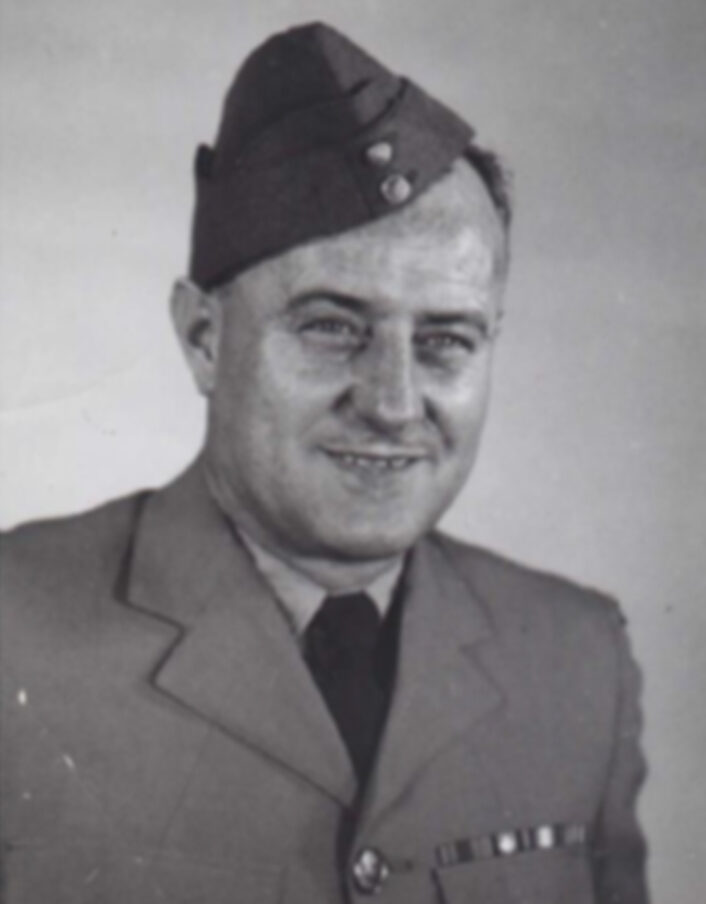
He was happy to come home to his own kids and wife, soon the kids grew up and started having kids of their own. I wish my grandpa were still here so I could be asking him about this all face to face, however he passed in 2008 peacefully in his sleep beside my grandma. I came home to help take care of my grandma for a bit after; she was lost and had to learn to live without him.
My grandfather was one of five military boys raised by my great-grandfather Alphee Richard Lavigne. Alphee fought in WWII so his five sons wouldn’t have to see active combat like he had. Earning multiple medals along the way like the Canadian Volunteer Service Medal, the Defence Medal, and the War Medal 1939-1945.
He fought in the war and was one of the lucky ones who were able to come back home to Canada, to keep raising his rambunctious boys into the men he knew they’d become. He lived well into his 90s, but when crossing a street in Aylmer, Quebec in 1985, he was struck by a car and passed away soon after.
I have settled in lovely Alberta with my daughter. I guess I enjoyed the northern part of my family’s history, I have been lucky enough to call home to Nunavut and NWT at different times in my life and hopefully one day can visit the Yukon too.
My family has always been big on education and bettering yourself. I have a few family members who were once teachers.
Finding Portage College in Lac La Biche, and being able to attend school, there is an absolute honor. You can feel the love and history echoing in the hallways from students and teachers passed, and probably the future with how energy can work.
When I finish the Hairstyling program, I plan to finish my apprenticeship and one day I was to bring more jobs to the little town of Andrew to which I live. This little community needs hope for the future, and if I can help even the smallest bit, it would mean the world to me. I want people around me to grow in an open-hearted sense, and in this world any ray of light can make the biggest difference for someone.
The lessons from when our veterans served seem to have been forgotten. Values learned even just 40 years ago could still have the same impact today if people were to seriously take heed. The possibility of war floats so close now. Forgetting history will ensure we repeat it. It’s just human nature, and it makes my heart sad. Too many have been hurt by war.
Jennifer Paul – Practical Nurse 2026
Veteran connection: Grandfather Adolphus Kakeesim
Adolphus Kakeesim was my maternal grandfather. He served during the Second World War, and his service is a meaningful part of my family history.
My grandfather passed away on April 1, 1979, after an illness. Although he did not lose his life on the battlefield, his service during the Second World War represents a significant sacrifice and an important part of our family’s history. His generation experienced hardships and uncertainty that are difficult for many of us today to fully understand.
His bravery and willingness to serve his country are qualities that my family continues to remember and respect.
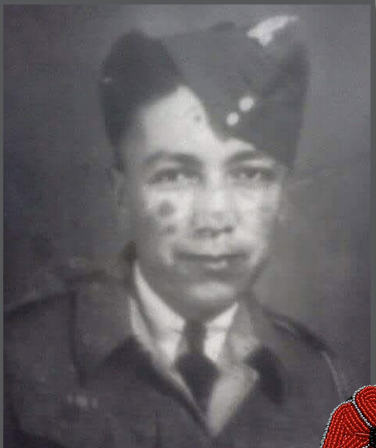
My grandfather is remembered through the stories shared within our family and through the memories and photographs that have been passed down. When I think about his service, I think about the courage it took for him and so many others to leave their families and face the realities of war. Their experiences remind me that freedom and opportunity should never be taken for granted.
The stories of Canada’s soldiers remain relevant today because they teach us about courage, resilience, responsibility, and the importance of standing up for something greater than ourselves.
As I reflect on my grandfather’s life and service, I also think about my own responsibilities and the challenges I have faced. I am a single mother raising my daughters as their only living parent. Their father passed away, and I do not have additional financial support or assistance to rely on. Being a parent while pursuing an education has not always been easy, but my daughters are one of my greatest motivations. I want to show them that difficult circumstances do not have to determine our future.
I have learned that setbacks are not the end of the journey. They can become opportunities to grow, learn, and come back stronger. I work hard, remain positive, and refuse to allow obstacles to stand in the way of my goals. I want to have a positive influence not only on my daughters, but also on the people I will care for throughout my nursing career.
Education is especially important to me because it represents opportunity, independence, and the ability to build a better future for my family. I am currently completing my first year of the Practical Nurse program at Portage College. My goal is to graduate and begin working as a practical nurse, while continuing my education toward a Bachelor of Science in Nursing degree. Ultimately, I want to become a registered nurse and use my education to provide compassionate, respectful, and quality care to others.
I do not take the opportunity to pursue higher education for granted. I am determined to make the most of it and to continue moving forward despite the challenges I have experienced.
My grandfather’s story reminds me that courage can take many forms. For him, courage meant serving his country during the Second World War. For me, courage means continuing my education, raising my daughters, overcoming loss, and working toward a future where I can care for and support others. I hope to carry forward the values of perseverance, service, and responsibility that I associate with my grandfather and his generation.
Upon graduation, my goal is to work as a practical nurse and continue toward my Bachelor of Science in Nursing. I want my daughters to see that education and determination can open doors, even when life presents difficult circumstances. I also hope to use my career to make a positive difference in the lives of the people and communities I serve. Most importantly, I would carry this opportunity forward with gratitude for those who served before me, including my grandfather, Adolphus Kakeesim, whose service remains an important part of our family’s story.
More Stories
Deni Gill – Portage College Student Advisor
Veteran 2003-2010 Canadian Armed Forces 1 Service Battalion – Afghanistan
I joined the Canadian Armed Forces in 2003 at the age of 38. Some might say I was a little old to start a military career, but I figured, why not. After completing my training, I was posted to 1 Service Battalion in CFB Edmonton. And just to make things interesting, I was wearing a Navy uniform while serving on an Army base.
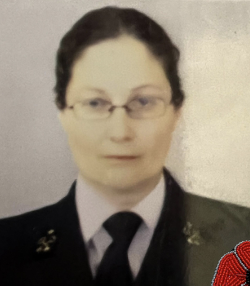
My father was a proud Navy veteran who served for 32 years. He first taught me Navy drill when I was a teenager and gave me a refresher when I joined the military. Unfortunately the Army had other ideas! Dad thought Army drill was ridiculous, with all the stomping and slamming their feet on the ground. Needless to say, I struggled with Army drill and was always put at the back of the formation! Apparently, dad had trained me a little too well!
I volunteered to deploy to Afghanistan shortly after completing my training and and served at Camp Julien from 2004 to 2005.
My time in the military was an adventure I’ll never forget. There were challenges, plenty of laughs, lifelong friendships, and experiences that most people will never have. I am incredibly proud to have served my country and to have worn the Canadian uniform. If I had the opportunity to do it all over again, I wouldn’t hesitate.
I served from 2003 to 2010 but my military service will always be part of who I am.
I may have taken off the uniform, but I’ll always be a veteran.
“In loving memory of my father, Edward Hinch, a proud Navy veteran who served his country for 32 years. He taught me my first drill, encouraged me when I joined the military, and was always proud of my service. Dad, you taught me Navy drill, but the Army had other ideas. Fair winds and following seas, Dad.”
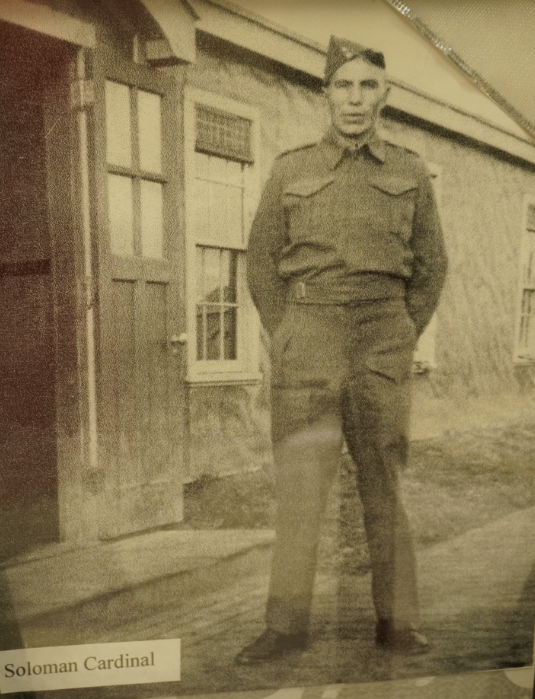
Veteran Pte. Soloman Cardinal
Whitefish Lake First Nation – Killed in Action in Italy, Sept. 18, 1944
Soloman Cardinal from Whitefish Lake First Nation No. 128. Soloman voluntarily enlisted on July 23, 1942 at Edmonton and joined the Loyal Edmonton (Eddies) Regiment.
He spent a year in the UK Theater before being transferred to the Mediterranean Theater of War on February 19, 1944. He was Killed In Action on September 18, 1944 during the Battle of San Fortunato Ridge near Rimini, Italy.
On that day, the fighting for the Canadian Loyal Edmonton Regiment (“The Loyal Eddies”) was an incredibly intense, brutal, and bloody assault against heavily entrenched German forces at the San Martino Cemetery, part of the larger Battle of San Fortunato Ridge near Rimini.
The Edmontons watched their supporting British and Canadian Sherman tanks explode under devastating German anti-tank fire as they moved over the crest. Undeterred, the infantrymen pushed forward on foot to the hilltop cemetery. Upon reaching the San Martino Cemetery, the lead platoons were immediately pinned down by a murderous crossfire. German defenders targeted them with heavy machine guns and precise, high-velocity 88mm artillery fire, which literally tore the cemetery’s low stone walls to shreds.
The prairie boys from Alberta were forced to cling to the earth for three agonizing hours, utilizing individual tombstones, graves, and slight undulations in the dirt to stay alive while artillery shells rain down directly on top of them. Despite the horrific shellfire, the Edmontons tenaciously held their ground. The regiment suffered severe casualties, with 20 Loyal Eddies killed in action and dozens wounded.
Their grim determination at the cemetery on September 18 ultimately helped fracture the German defenses, allowing the 1st Canadian Infantry Division to capture the heights of San Fortunato Ridge over the subsequent days. This hard-fought breakthrough cracked the final German defensive lines anchoring Rimini.
Soloman gave the ultimate sacrifice for his Country. A country that did not consider him a citizen. We can never repay the debt we owe him.
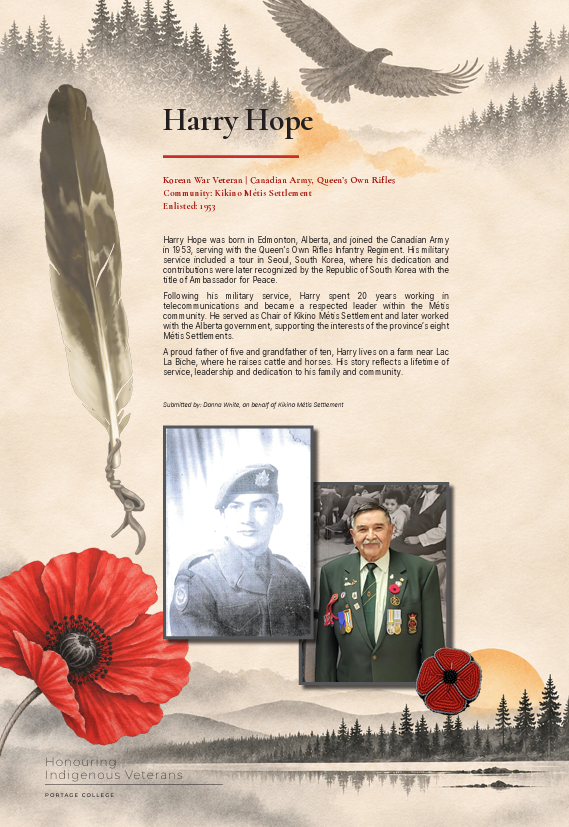
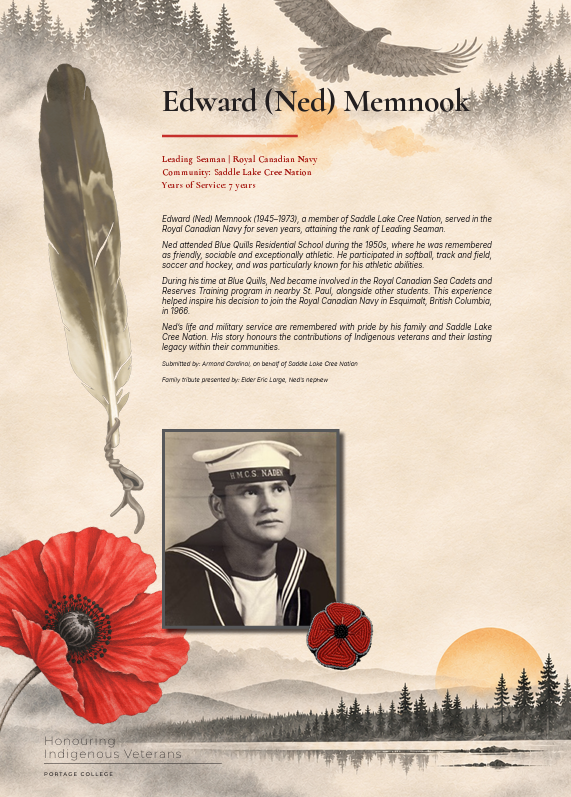
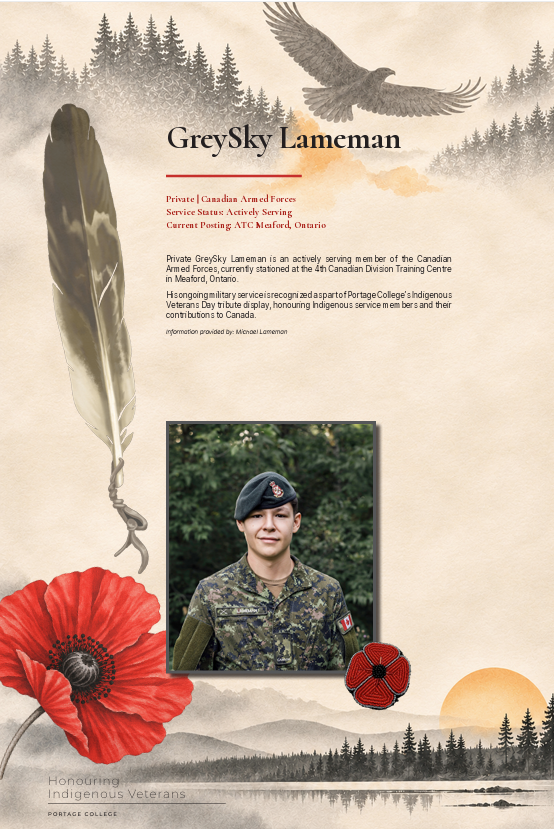
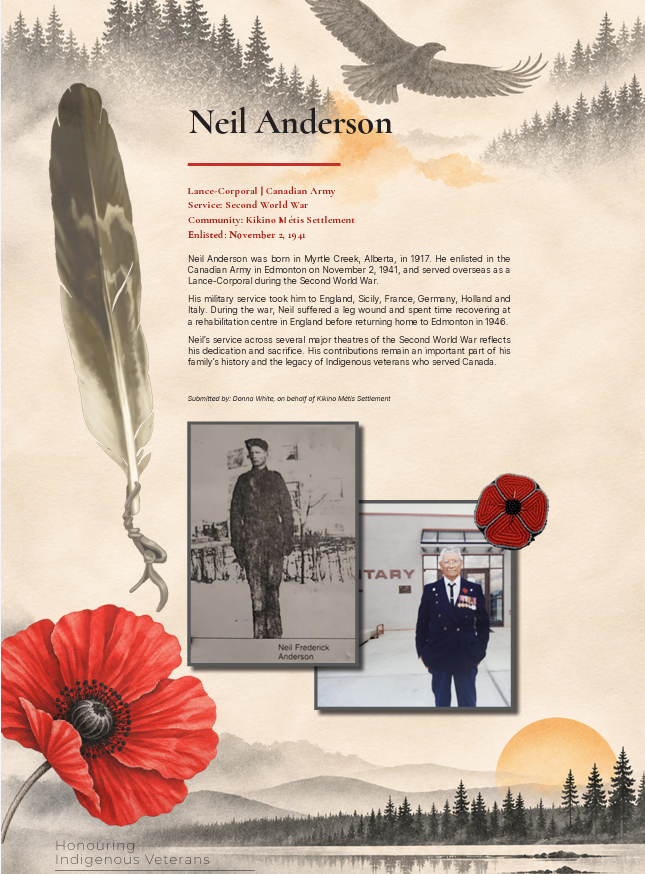
Click HERE to find a list of submitted stories we received for this year’s Indigenous Veterans Day ceremony at Portage College. The stories include veterans of the First and Second World Wars, Korea, Vietnam, peacekeeping, Afghanistan and Canadian Armed Forces members currently in active service.